Save items you love by
clicking the heart icon next
to them!




-
 Delivery:1 to 5 days within the UAE, depending on the size of the object and the location to be delivered to.
-

About
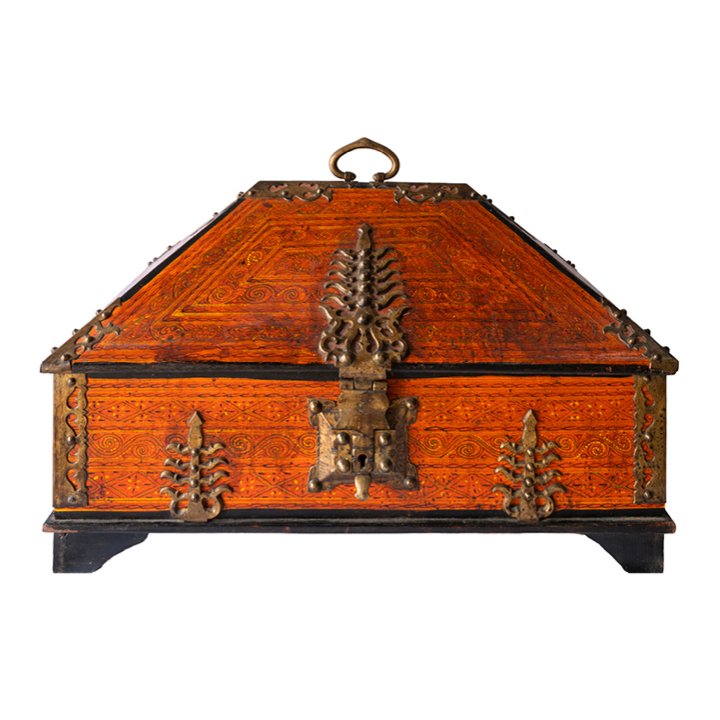
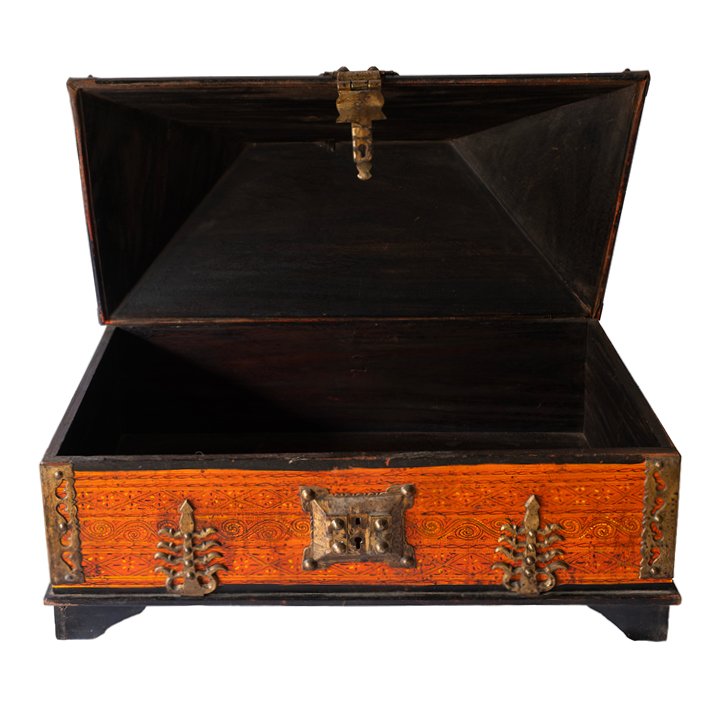
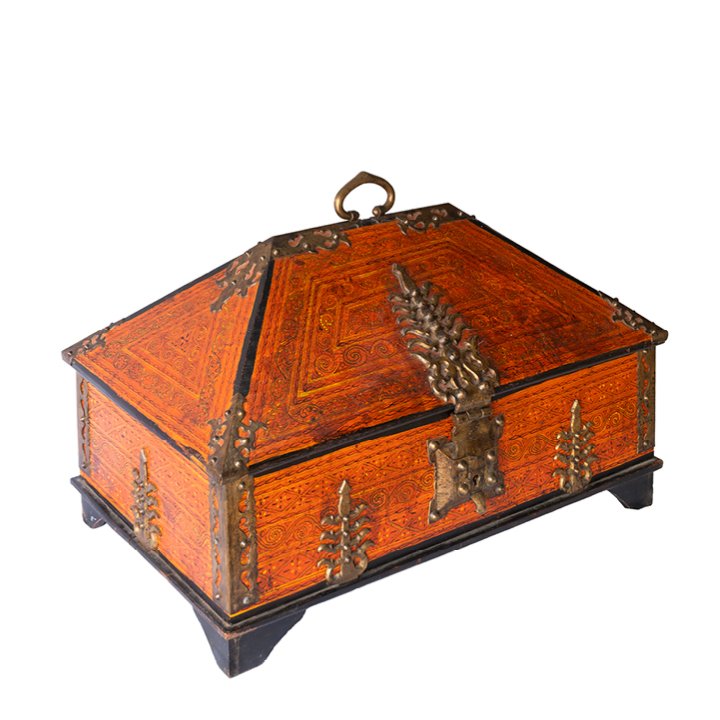
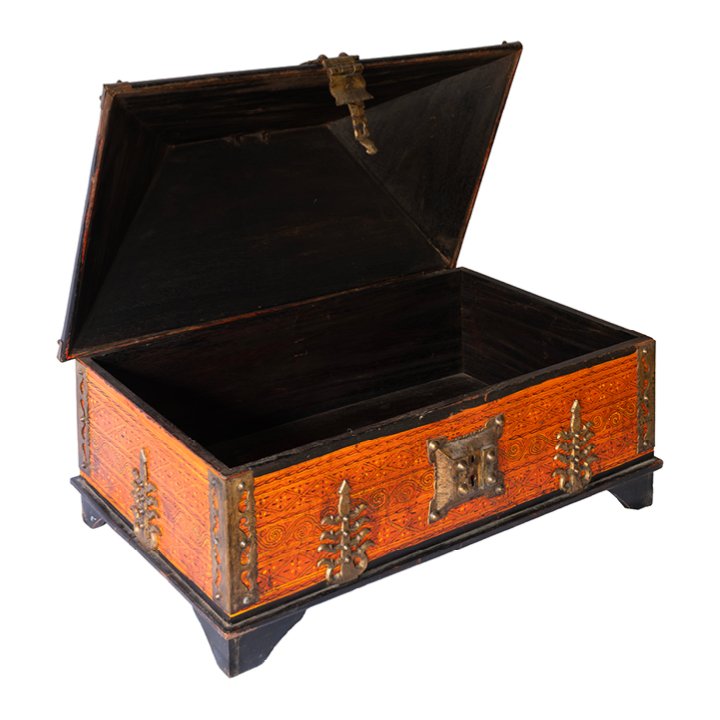
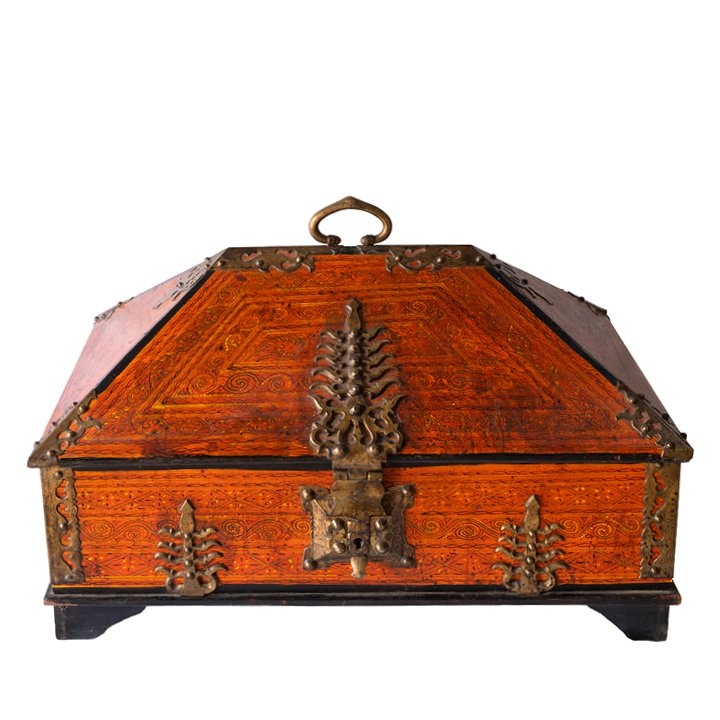
A very large Nettur Petti jewellery box from Kerala, India, dating to the late 19th century or later. The rectangular lacquered wood body stands on four feet and is fitted with a steep pyramidal hinged lid, ring handle, large hinged lock, and extensive brass mounts.
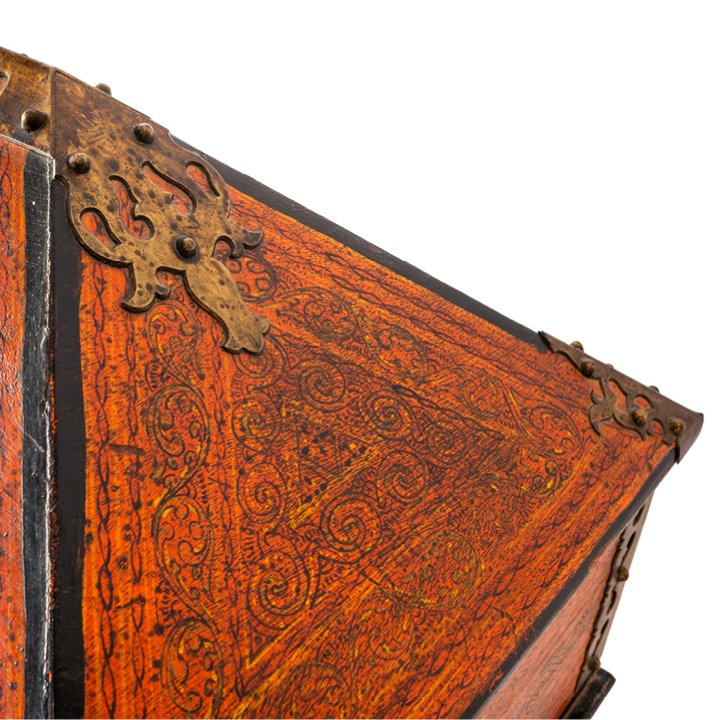
The exterior is densely decorated with scrolling vegetal and geometric patterns in warm orange and black tones, while the interior opens to a single compartment. The characteristic pyramidal form and hand-worked brass fittings are closely associated with the traditional Nettur Petti jewellery boxes of Kerala.
The Nettur Petti is a traditional jewellery casket from Kerala, named after Nettur in the Malabar region near Kozhikode. Historically used by aristocratic and wealthy families to store jewellery and valuables, these boxes are typically made from rosewood, teak, or other local woods and fitted with hand-worked brass hinges, locks, and decorative mounts. Their distinctive pyramidal lids are traditionally associated with the architectural forms of Kerala temples and houses.
Item Details
-
CreatorUnknown
-
DimensionsH 52 cm x W 74 cm x D 45 cm
-
Weight5 kg
-
Place of originIndia
-
ConditionVery GoodPackageCOC Box/Bag
-
Period / DateLate 19th – Early 20th Century
-
Materials & TechniquesWood - Lacquered Wood - Brass - Painted Decoration - Metal Mounts - Hand Forging
Returns, Payment Methods & Product Profile
-
Returns & Refunds

-
Payment Methods

-
Product Profile

-
Stay Inspired
-